January 20, 2026
Estate Sale vs. Garage Sale vs. Auction: Which Option Gets You the Best Return?
Estate Sale Planning

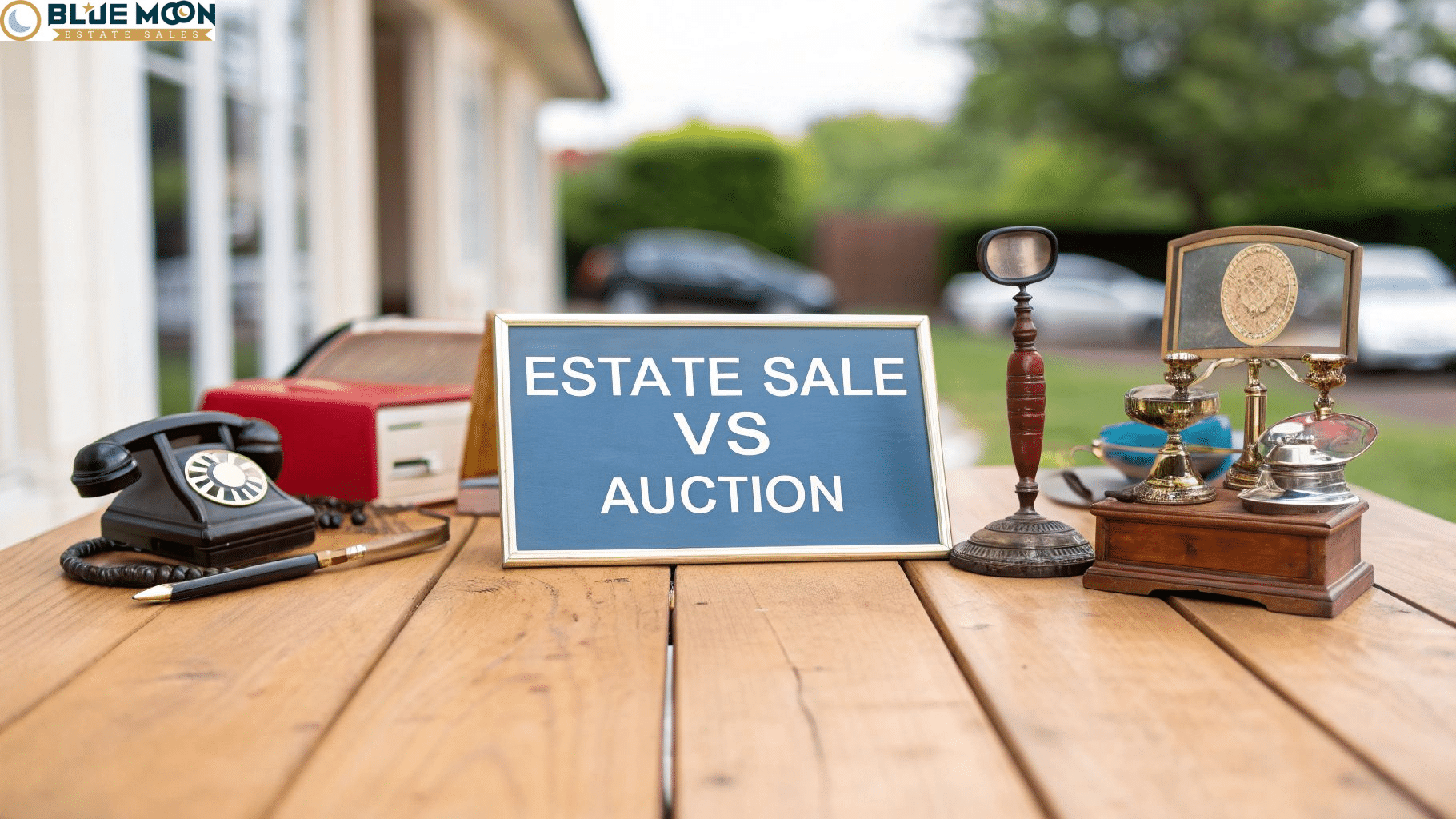
Downsizing a home can feel emotional and overwhelming. You see years of memories in every room. At the same time, you want the best possible return from your belongings. In this moment, one big question appears. Should you choose an estate sale, a garage sale, or an auction?
Each option works in a different way. Each one attracts different buyers. As a result, each method can bring a different level of profit. A garage sale may give you quick local cash. An auction may push rare items to higher bids. An estate sale can balance speed, organization, and strong overall returns.
This is where a trusted partner makes a real difference. Blue Moon Estate Sales specializes in estate sale services, liquidation, and downsizing support. The team handles pricing, staging, advertising, and selling for you. You stay in control without managing every detail. Their proven process helps you empty the home, protect sentimental pieces, and still aim for top-dollar results.
Throughout this guide, you will compare estate sales, garage sales, and auctions side by side. You will see how each method works for everyday items and high-value pieces. More importantly, you will learn which option can deliver the best return for your situation. Along the way, you will also see how Blue Moon’s nationwide network and high service standards keep the entire experience simple and stress-free.
An estate sale is a professional, on-site event where most or all of a home’s contents are priced, displayed, and sold to the public over one or more days. It usually happens when someone is downsizing, relocating, or settling an estate after a major life change. Instead of selling a few random items, an estate sale often includes furniture, décor, kitchenware, tools, clothing, collectibles, and more, all organized room by room.
Unlike a casual garage sale, an estate sale is structured and strategic. Items are tagged with individual prices, based on fair market value and current demand. Shoppers walk through the home, browse each space, and buy items directly from the property. This setup creates a store-like experience inside the house, which can attract serious buyers, collectors, and resellers who are ready to spend more than typical yard sale shoppers.
A garage sale is a casual, do-it-yourself event held in a driveway, yard, or garage where homeowners sell unwanted items directly to local shoppers. It usually focuses on everyday belongings like clothes, toys, books, small décor, and household basics at low, bargain-friendly prices. There is no formal pricing strategy or professional setup. You simply sort items, place stickers or signs, and negotiate with buyers as they arrive.
Compared with an estate sale, a garage sale is smaller and more informal. You are not trying to liquidate the entire home. Instead, you clear out selected clutter and make quick cash from neighbors and passersby. Yard sale and garage sale are often used as similar terms, but both share the same core idea: simple, local, and budget-focused events. The downside is limited reach, lower perceived value, and less appeal for serious collectors or higher-end buyers.
An auction is a structured selling event where buyers compete through bids, either live on-site or online. The auctioneer or platform starts with a low opening price, and interested buyers raise their offers until no one is willing to bid higher. The item then sells to the highest bidder, often within seconds or minutes. This fast, competitive process can drive strong results, especially for antiques, collectibles, fine art, jewelry, and other valuable or rare pieces.
In an estate context, auctions can be used for select high-value items or for larger groups of goods. Compared with a garage sale, the bidding structure often creates more excitement and urgency. Instead of haggling over a fixed price, buyers push each other up. However, auctions usually come with fees or commissions for the auctioneer or platform, and not every item will attract aggressive bidding. For many households, an estate sale for the bulk of the home and targeted auctions for a few standout items can be a smart, profit-focused mix.
Because the goal is often full or near-full home liquidation, estate sales focus on clearing a large volume of items in a short time while still protecting value. This requires smart pricing, strong staging, and targeted marketing. Professional estate sale companies know how to showcase high-value pieces, bundle lower-value items, and manage discounts across the sale days to keep traffic and sales strong.
Blue Moon Estate Sales specializes in precisely this kind of event. The team handles everything from sorting and staging to pricing, advertising, and running the sale on-site. Their experts understand buyer behavior, local demand, and what sells best in each market nationwide. With Blue Moon, families can skip the stress of DIY planning and still aim for maximum return on household contents while emptying the property efficiently and respectfully.
Key Differences: Estate Sale vs. Garage Sale vs. Auction
| Aspect | Estate Sale | Garage Sale | Auction |
| Effort | Professional management | DIY high effort | Auctioneer handles |
| Reach | Local + online promo | Hyper-local | Nationwide buyers |
| Pricing | Fixed, discounted | Haggle/low | Bidding-driven |
| Best For | Full estates | Everyday items | Valuables |
| Returns | 40-60% value | 10-30% value | 50-90%+ for rares |
Pros
An estate sale can generate high volume sales in a short time because almost the entire home is open for shopping. Professional staging makes rooms look organized and inviting, which encourages buyers to explore more and spend more. Expert pricing also helps protect the value of furniture, décor, antiques, and everyday items that might be underpriced in a casual sale.
With a company like Blue Moon Estate Sales, you also gain structured marketing, signage, and online promotion that bring serious, ready-to-buy shoppers to the property. Their experienced teams know how to manage crowds, negotiate fairly, and run discounts over multiple days to clear as much as possible while aiming for strong returns nationwide.
Cons
The main downside is commission. Professional estate sale companies typically charge a percentage of the total sale, often in the 30–50% range, depending on the scope and market. However, many families still come out ahead because expert pricing, higher buyer traffic, and better presentation often offset what they would lose with low DIY pricing or unsold items. For most full-home liquidations, the time saved, stress reduced, and higher total return can make that commission feel worthwhile.
Pros
A garage sale has one big advantage: no professional fees. You keep every dollar you earn because you run the event yourself. Setup is flexible and simple. You pick a weekend, set items out in your yard or garage, and use basic handmade signs. For people who want immediate cash from low-value or miscellaneous items, a garage sale can work well.
Another benefit is control. You choose prices on the spot and can negotiate freely with neighbors. For clutter clearing and small-scale downsizing, this approach can feel relaxed and informal. Many families also enjoy the social feel of chatting with local shoppers.
Cons
The reach is limited. Most buyers come from your neighborhood or people who notice your signs. This often leads to lower prices and fewer serious buyers, especially for furniture or collectibles. Weather is another risk. Rain, wind, or extreme heat can kill traffic and ruin the day.
You may also end the event with a lot of leftovers that still need donation or disposal. For large estates or time-sensitive moves, that extra work can become stressful. Compared with a professional estate sale, the overall return per item is usually much lower.
Pros
Auctions shine for unique, rare, or highly collectible items. The bidding process creates excitement and urgency. When two or more buyers want the same piece, competitive bids can drive the price beyond what a fixed tag might have achieved. This makes auctions attractive for fine art, vintage collectibles, jewelry, coins, or specialty antiques.
Auctions can also be held live, online, or in a hybrid format, which opens the door to buyers beyond your local area. This broader pool often increases the chance of finding the “right” buyer who truly understands the value of a specific item.
Cons
Auctions require preparation and coordination. Items need to be sorted, cataloged, photographed, and described in detail. This takes time and effort. In addition, auction houses and platforms typically charge fees or commissions, and buyers may pay premiums on top of their bids.
Not every item will receive strong interest. If bidding is weak, an item may sell for less than expected or may not meet a reserve price if one exists. For everyday household goods, the auction model is usually less efficient than an estate sale. That is why many families choose estate sales for the bulk of the home and reserve auctions for a small group of standout pieces.
When you compare estate sales, garage sales, and auctions for return on investment, the best option usually depends on how much you are selling and what you are selling. For full-home or large-scale downsizing, a well-run estate sale typically delivers the strongest overall return. It turns a high volume of everyday items, furniture, and décor into thousands of dollars in a short time. Auctions often win on single, high-value items, while garage sales usually bring in the least per item.
For many families, estate sales can generate several thousand to tens of thousands of dollars from an entire household, while still clearing most of the property quickly. Auctions are ideal when you have standout pieces that may attract collectors and push bids higher. Garage sales work for low-value decluttering but rarely maximize profit. If your goal is both solid earnings and a smooth experience, partnering with a professional estate sale company like Blue Moon Estate Sales can be the most balanced and profitable option nationwide.
Blue Moon’s teams know how to price for the market, promote the sale, and manage discounts over the sale period to keep items moving without leaving easy money on the table. They help you avoid underpricing valuables in a garage sale or over-relying on auctions for everyday goods that may not draw strong bids. With expert guidance, you can match the right method to your items and earn more while doing less.
Your location plays a major role in which option performs best. In dense urban areas and major cities, auctions and estate sales often benefit from larger buyer pools and higher demand for unique or vintage pieces. Online bidding and strong marketing can connect city-based collectors and investors with your most valuable items. In suburban neighborhoods, estate sales and even some garage sales can perform well because local families are actively hunting for quality furniture, décor, and practical household items at fair prices.
Beyond location, think about your timeline, energy, and item mix. If you are on a tight deadline, a professionally organized estate sale can clear a home efficiently while still targeting good returns. If you have a few standout collectibles, combining an estate sale with select auction placements may be smart. Garage sales fit casual decluttering when profit is not the main priority.
When you want clarity and a strategy tailored to your specific situation, a free consultation with Blue Moon Estate Sales can help you decide. Their nationwide presence and experience with local markets allow them to recommend the ideal approach for your area, your items, and your goals. This way, you are not guessing which method might work—you are choosing a plan designed to give you the best possible return with professional support from start to finish.
You should choose Blue Moon Estate Sales when you want a smooth, professional way to liquidate a home and still aim for the best possible return. It is especially helpful during major life transitions like downsizing, relocating, or handling a loved one’s estate. In these moments, you often need more than a simple sale. You need a trusted team that understands pricing, buyer behavior, and how to move a large volume of items without chaos or stress.
Blue Moon offers a free consultation, which makes the first step easy. During this call or visit, their team reviews your goals, walks through the property, and explains what you can realistically expect from an estate sale in your area. They handle sorting, staging, pricing, advertising, and running the sale days, so you do not have to manage signs, crowds, or negotiations on your own. Their proven systems and brand reputation help attract serious shoppers who are ready to buy, not just browse.
For buyers, Blue Moon sales are also a trusted place to discover rare finds, unique décor, vintage pieces, and quality everyday items at fair prices. This strong buyer base supports better overall results for sellers. Because Blue Moon operates through a nationwide network of locally owned franchises, you get both local market expertise and the power of a recognized estate sale brand. If you want a guided, professional path to emptying a home, protecting value, and reducing stress, explore bluemoonestatesales.com and schedule your free consultation to get started.

Since 2009, Blue Moon Estate Sales has taken customer expectations to the moon and back! We provide detail-oriented and supremely organized residential, commercial and moving estate sale services across the country. Whether you need help downsizing, respectfully rehoming the belongings of a loved one or finding high-quality estate sales in your neighborhood, we deliver an outstanding experience.